
The Pleasure in Small Things
Final Discussions & Exhibition
December 16, 2025


Tuesday, December 16th, Exhibition & Discussions, ETH Zürich, ONA E30, 08:00 – 19:00
Guests: Monster Chetwynd, Pierre Chèvremont, Tuukka Laurila, Nora Walter
Restaging – Reimagining: Exhibition and Discussions
October 15, 2025

Group A


Wednesday, October 15th, Exhibition & Discussions, ETH Zürich, ONA E30, 10:00 – 17:00


Diploma FS 2026
Architecture School

Dance Deck, Kentfield California, Anna Halprin 1954


The FAU (1969) designed by Vilanova Artigas was an expression of the radical Paulista architecture school of the 1960s, and Gund Hall (1972) designed by John Andrews had similar grand ambitions. The HIL building tells a very different story, accidentally becoming the department of architecture when the ETH administration decided it was best to remove architecture students from the city centre where they had become too involved in the youth protests of the 1970s. The ugly brown building has never been much of an expression of our school’s desires.
This semester we will use the diploma project to explore how the HIL building can be re-structured to be a base for the department, and a more hospitable and sustainable place to meet and work. Since it is unlikely that the present labyrinth could be improved by enlargement, our efforts will be to concentrate the existing, making it lighter, clearer and more flexible.
We will also study examples of more dispersed and non-institutional learning, like Anna Halprin’s Dance Deck and Thomas Hirschhorn’s Gramsci Monument, places that demonstrate how learning can be more flexible and responsive to both its students and to ever changing educational contexts. We will combine the idea of a central base with mutable cells, spaces in and around the city that can more closely engage with the diverse people and situations of Zurich and beyond. By working both with the centre and the non-centre, perhaps we can start to imagine an architecture school fit for the 21st century.
We will continue to collaborate with Newrope in three ‘rooms of entanglement’, workshops where content, process and place are considered in an expanded forum.
Preparation phase:
-study of alternative places of education and the preparation of journals that compile the sites, programmes and central qualities of these open and more flexible schools.
-preparation of glossaries of learning.
-preparation of atlas of the HIL building and of possible non-central sites for the future department of architecture.
Elaboration phase:
-development of specific design proposals that incorporate new programmes and ideas of learning for the new department of architecture.
Diploma, FS 2026, ETH Zürich
Chair Caruso
Emilie Appercé, Tibor Bielicky, Adam Caruso
Newrope
Ellena Ehrl, Freek Persyn
Lecture MCBA Lausanne
What is it worth?
October 1, 2025, 18:30

Lycée Hôtelier de Lille, Caruso St John Architects 2011–2016
Adam Caruso
Lecture for the Conférence Espaces communs
Musée Cantonale des Beaux-Arts Lausanne, Auditorium
More information & registration
The Village


Diploma FS 2025


Linthal, located at the end of the Glarus valley, carries a rich agricultural and industrial heritage that is still visible in its built environment, marked today by many underused or vacant buildings. Once a vibrant rural hub, it now bears the character of a transit zone, with essential services found only further down the valley. Yet within this apparent emptiness lies the potential for renewal. The unique landscape and close-knit scale of the village invite new ideas for how people might live, work, and engage with nature. Linthal is not defined by the anonymity of cities but by community spirit, resilience, and a deep connection to the land. Qualities that can become the foundation for a future shaped by sustainable agricultural practices and a strengthened rural collaboration.
In order to create and maintain such a regenerative farming concept a new actor is introduced that concentrates the responsibility for administrative and organizational as well as distributary questions in one figure. Various agents are part of a regenerative farm and ask therefore for the orchestration of the system cycles. With the One Roof Cooperative a contact point occurs. Combining two associations under one large roof: the farmer’s and the gardener’s association, the cooperative fosters dialogue, support, sharing and negotiations. Located in a former farmhouse, it connects Linthal’s traditions on several levels. Remnants in the ambient land evoke the presence of hidden networks and practices that are then illustrated by these artefacts. Some of them still fulfilling a purpose, some being reprogrammed and others standing their ground as artworks.
All together form a composition that allows people to experience natural landscapes and agricultural practices in a humble way without being disturbed. The scenery is about celebrating what is already there, identifying the potential and making it productive again. This does not solely imply economic profit, but more significantly the enhancement of communal identity and the collective appreciation of rural traditions and crafts.
Architecturally speaking, the former housing unit is transformed into the administrative interface of the cooperative, while the barn part gets a clear communal and production or processing based orientation. Together they break with the linearity that was predominant in Linthal before and where everything passed through. Now it invites us to stay, learn, exchange knowledge and spend time appreciating the land and its advantages. Increasing energies all over the village come together in the farmhouse, get refined and then distributed to customers and interested parties. The large roof provides not only symbolic shelter from weather conditions for the program. It is also offering a space for gathering, for festivities and workshops, allowing for engagement in agricultural practices and the celebration of simple but honest joy of high-quality products. It is embodying the love for nature and tradition and shows its appreciation for handicraft, in architecture and in agriculture.
By not being fully insulated, the building questions the spatial needs architecture has to provide in a rural and food processing setting. Therefore, the project challenges how architects could work with existing buildings and proposes settle adjustments that blend in seamlessly while still showing that something is happening.
Remoteness and Identity


Diploma HS 2024
Architecture in a Post-growth Society: Two Case-studies Around the Klausenpass
Lukas Nussbaumer
HS 2024 Switzerland at a Crossroads


Since the start of the industrial revolution, the western social system has been built on constant growth. Growth in population, economic performance, technological capabilities, cultural output - no area of human life has been untouched by this dynamic.
But it can no longer be ignored that we are at a breaking point. The planetary boundaries have been reached or already exceeded in many areas. The climate crisis as well as the biodiversity crisis are both negative consequences of this system.
A change of course is therefore not only needed, but inevitable due to demographics. Demographic developments will radically transform the society we know. Even if it still seems to be a distant future in Switzerland at the moment, the population here will also start to shrink in a few decades, even in urban areas. This is already the case in many European countries, and there are also areas in Switzerland that have been shrinking for decades. The area around the Klausen Pass is just such an area.
This project examines two case studies on both sides of the Klausen Pass to find out what kind of architecture makes sense in a shrinking society. How can places be created that enable a sustainable form of growth and coexistence in such a location? On the Glarus side, a new scheme is proposed for the former woollen weaving mill in Rüti, while on the Uri side, an new approach is implemented in the former Gasthof St. Anton in Spiringen.
Such shrinking places have one advantage: the forces of the market are significantly weaker and projects that are not aimed at optimising profits also have a chance to thrive. There is an opportunity to utilise these places creatively through small interventions and make them usable for society.
The projects are characterised by the fact that they consist of a large number of small interventions that can be carried out without great expense over a longer period of time. If an intervention is a success, it can be built upon; if it is a failure, it can be reacted to. In this context, architecture is not understood as a project, but as a process.

IEA Lecture
All buildings are beautiful
October 9, 2024, 18:00


Adam Caruso
IEA Lecture Series HS 24
Practice What We Teach?
ETH Zürich, ONA, Fokushalle
A New Museum
Kaspar Wysser / Tamino Hertel / Alexander Wiesner
FS 2024 A New Museum


Denner Schwamendingen, Group Material


Diploma FS 2024


The Anna Göldi Museum is located in Ennenda and is housed in the historic attic of the former Hänggiturm. It is barely recognizable from the outside and only the large letters ANNA on the chimney indicate that the museum is situated on the Trümpi site. The museum does not only tells a forgotten story of witches and women from another time, but also recalls the global influence and power of the textile industry in Switzerland.
In the first phase of the research, I looked at the content of the exhibition in the Anna Göldi Museum and took a closer look at the textile industry around Ennenda. As my grandmother was one of the workers in the Uznach spinning mill, I chose a very personal and intuitive research method. In the book Untold Stories I collected tellings of different women and recorded them as a collage in my book. The collected material is very diverse and highlights specific aspects that the women experienced and that concerned me. The aim was not to find a single truth, but to use the medium of the artist book to make them visible side by side without judging them.
On the ground floor of the museum, an additional program is to be provided that the residents of Ennenda can use and appropriate the space. As an exhibition, the women in my book have been given a space as a reminder of them and what they have experienced. Each of these spaces has a domestic character and does not correspond to the authoritarian character of a typical museum. Everyone should find their own access to the museum and new stories should be able to develop side by side in this new place.
In addition, a new park is to be created, which will become a visible center in Ennenda where people can meet or simply go for a walk. A water basin and a pavilion are located in the spacious area and give the outdoor area its character. The structures are simply designed, showcase the traditional craftsmanship of the area and provide another space for the clubs in Ennenda to appropriate and benefit from.

Redesigning Museums


Diploma HS 2023


Re (Reframe, Rearrange, Repeat)
Burak Kaya / Martino Gaia
FS 2023 Re (Reframe, Rearrange, Repeat)


Beverly Buchanan


Diploma FS 2023
Walzmühle
Yoann Miéville
FS 2023 Labour Reframed


Reframe, Rearrange, Repeat


Diploma HS 2022


The building of the Grenzsanität, designed by Heidi and Peter Wenger, is located at the train station in Brig. It was built in 1957 for the purpose of sanitary examinations of migrant workers passing the Swiss-Italian border. These examinations consisted of screenings for infectious diseases such as Tuberculosis by means of blood collection and radiologic exams. They were mandatory for people immigrating into Switzerland in order to obtain a work and residence permit.
The Grenzsanität is the architectural representation of the restrictive immigration policies established in the post-war years. Terms such as Saisonnierstatut, Überfremdung, Schwarzenbach-Initiative, or Grenzsanitätsdienst did not only shape the discourse about migration in those years, but affected the lives of thousands of people and families. The Grenzsanität is a Denkmal by means of which their story can be told.


Re form
Victoria Balmer / Marvin Bienz
FS 2022 Re form


Bullingerkirche


IEA Lecture
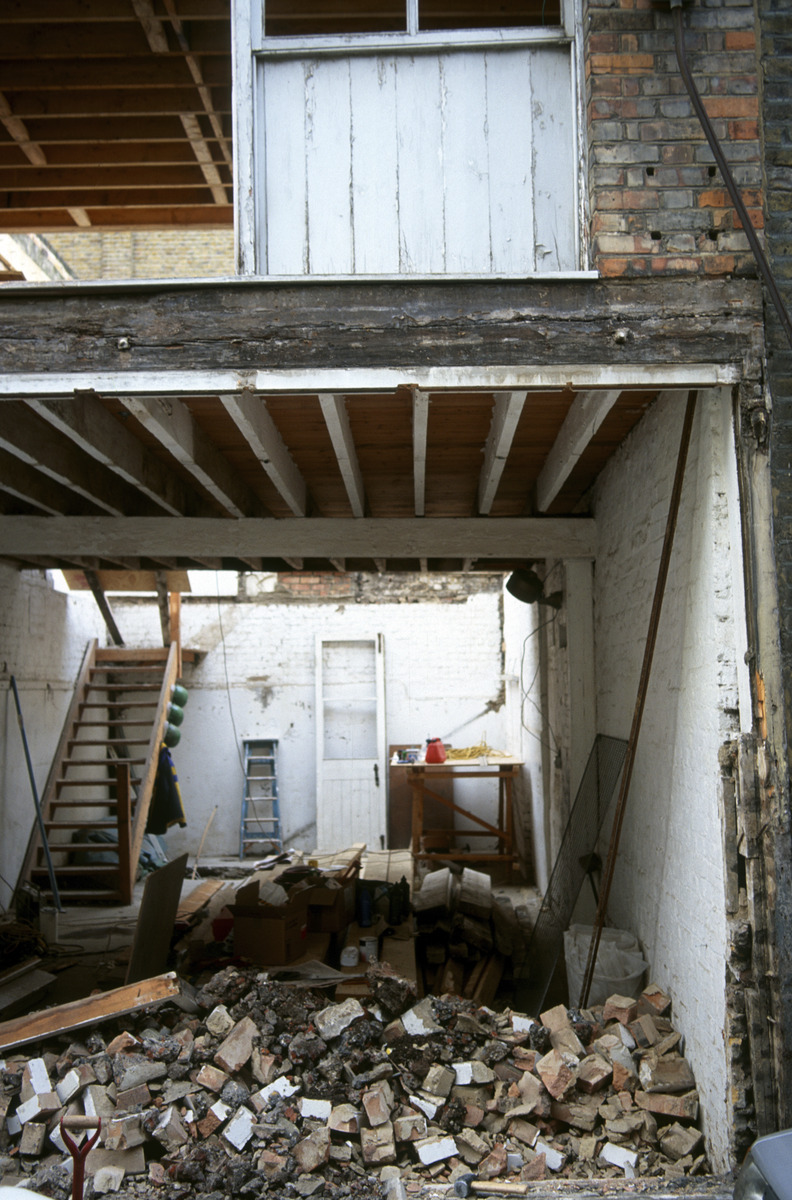
You cannot take risks without failing
March 15, 2022, 18:00
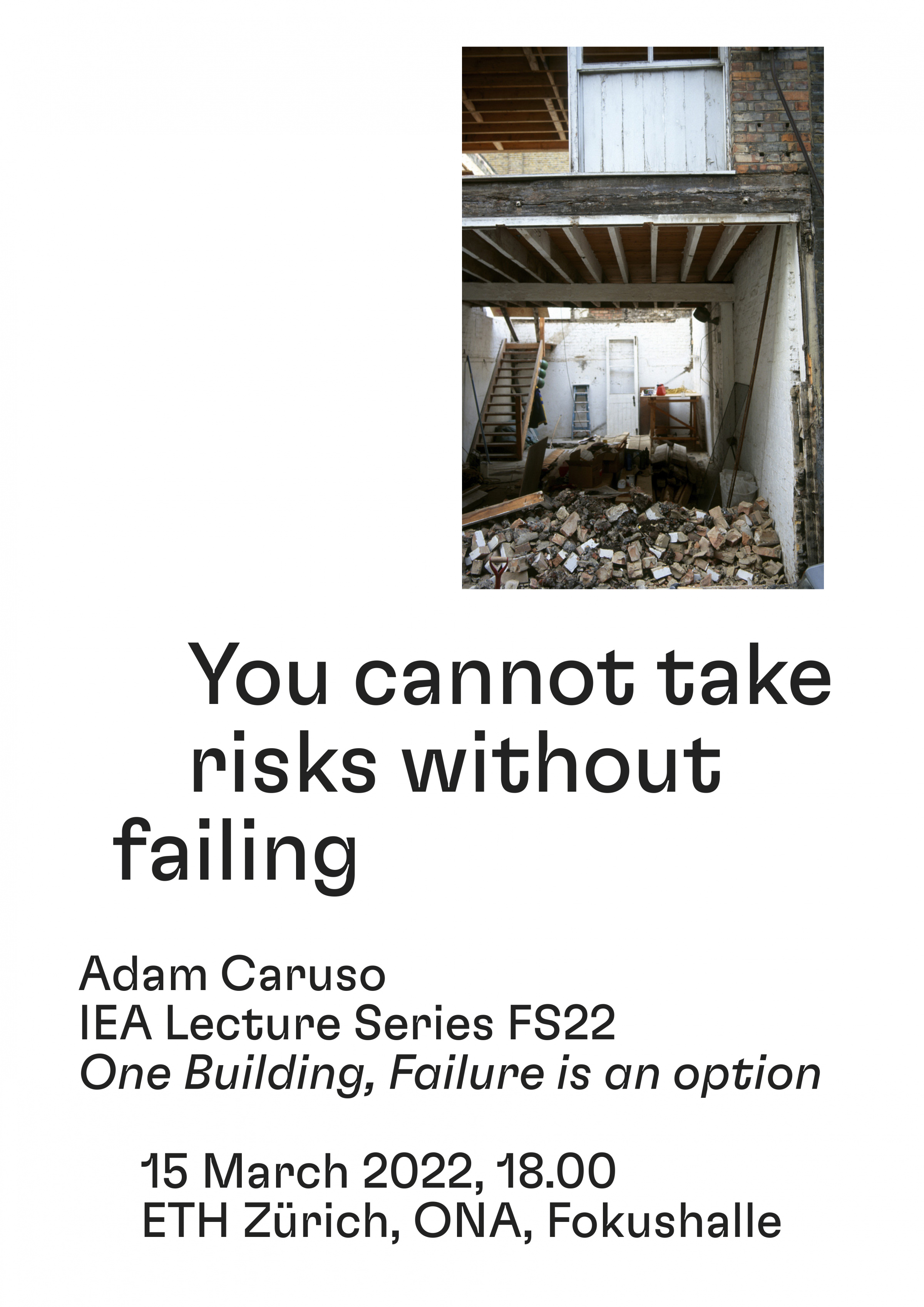
Adam Caruso
IEA Lecture Series FS 22
One Building, Failure Is an Option
ETH Zürich, ONA, Fokushalle
Interim, forever


Zitrone Dietikon


Diploma HS 2021

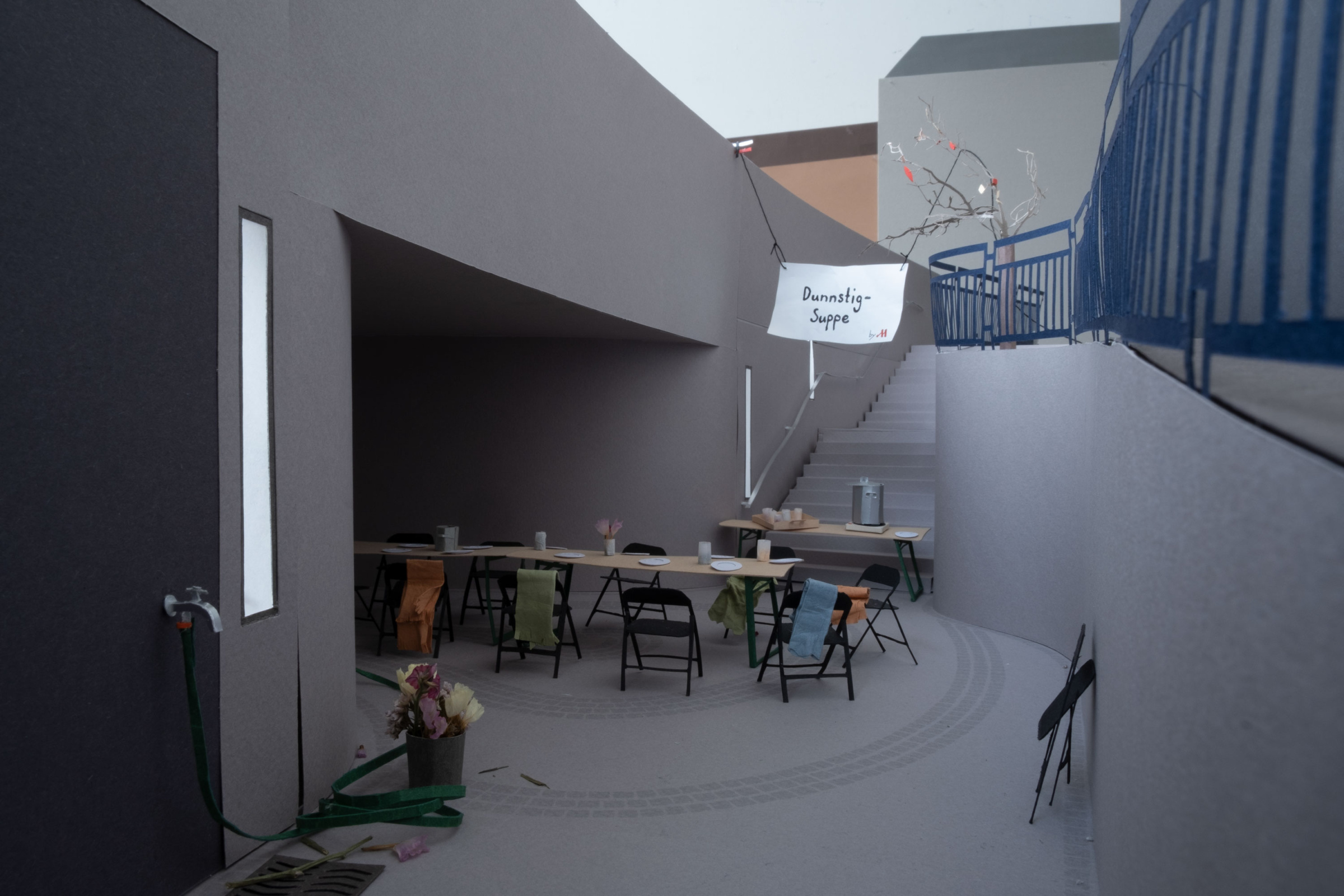


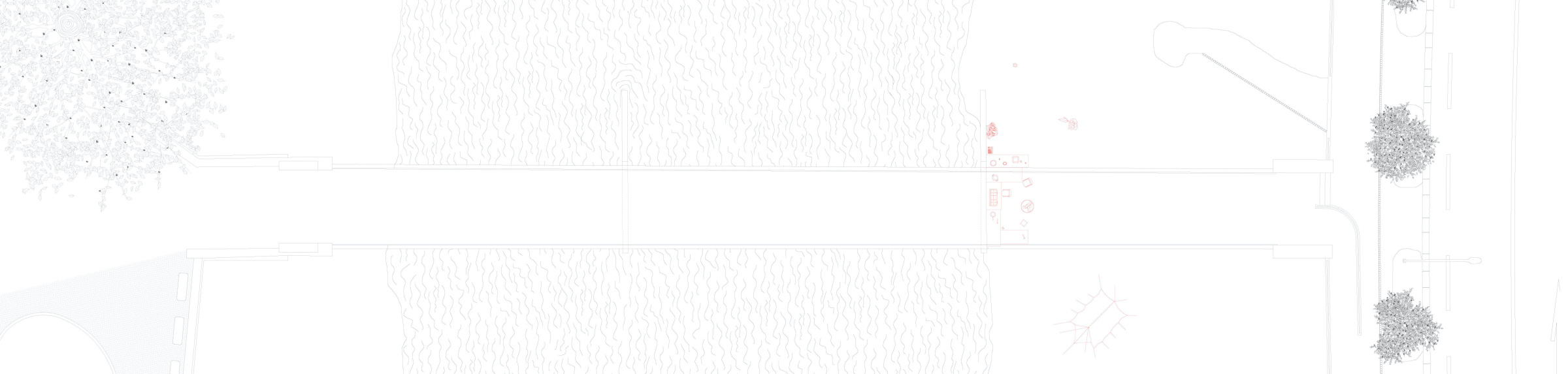


In unmittelbarer Umgebung des Hotels Marriott entwichkeln sich in den 70er, 80er und 90er Jahren um und auf dem Platzspitz verschiedene Szenen. Züri brännt 1980. Das Marriott ist Teil des gescheiterten Infrastrukturprojekts Ypsilon und dem Milchbucktunnel. Welten treffen hier aufeinander, voneinander entkoppelt. Die Strategie des temporären Besetzens und Nutzens von Freiräumen in der Stadt wurde in der Jugendbewegung der 80er Jahren oft genutzt. Mit leichten Interventionen wird an unbeachteten Orten Unerwartetes geschaffen. Sie spielen sich in unterschiedlichen zeitlichen und räumlichen Grössenordnungen ab.


Women Writing Architecture
Website Launch
June 30, 2021

The website womenwritingarchitecture.org was launched this week on June 30th. The new resource, an annotated bibliography of writing by women about architecture, is now publicly accessible to discover, browse and contribute to.
Making Plans for Living Together


Cohabitation
City as one living organism provides habitat for human and non-human being, they influence their abiotic environment and the environment in turn as well influence the biota.
Due to the urbanisation and monoculture soil usage, city becomes a refuge for wild animal. City should co-evolve with its environment, empower the nonhuman actors and define new typology for cohabitation.
Triemlifussweg is characterized as a „Siedlung Biotop“ connected Uetliberg and Cemetery Sihlfeld.
The these is an interdisciplinary research of sysnanthrope species and aim to develop a strategy of cross-species cohabitation.
Marc Délez / Amélie Bès
FS 2021 Making Plans for Living Together, Zürich


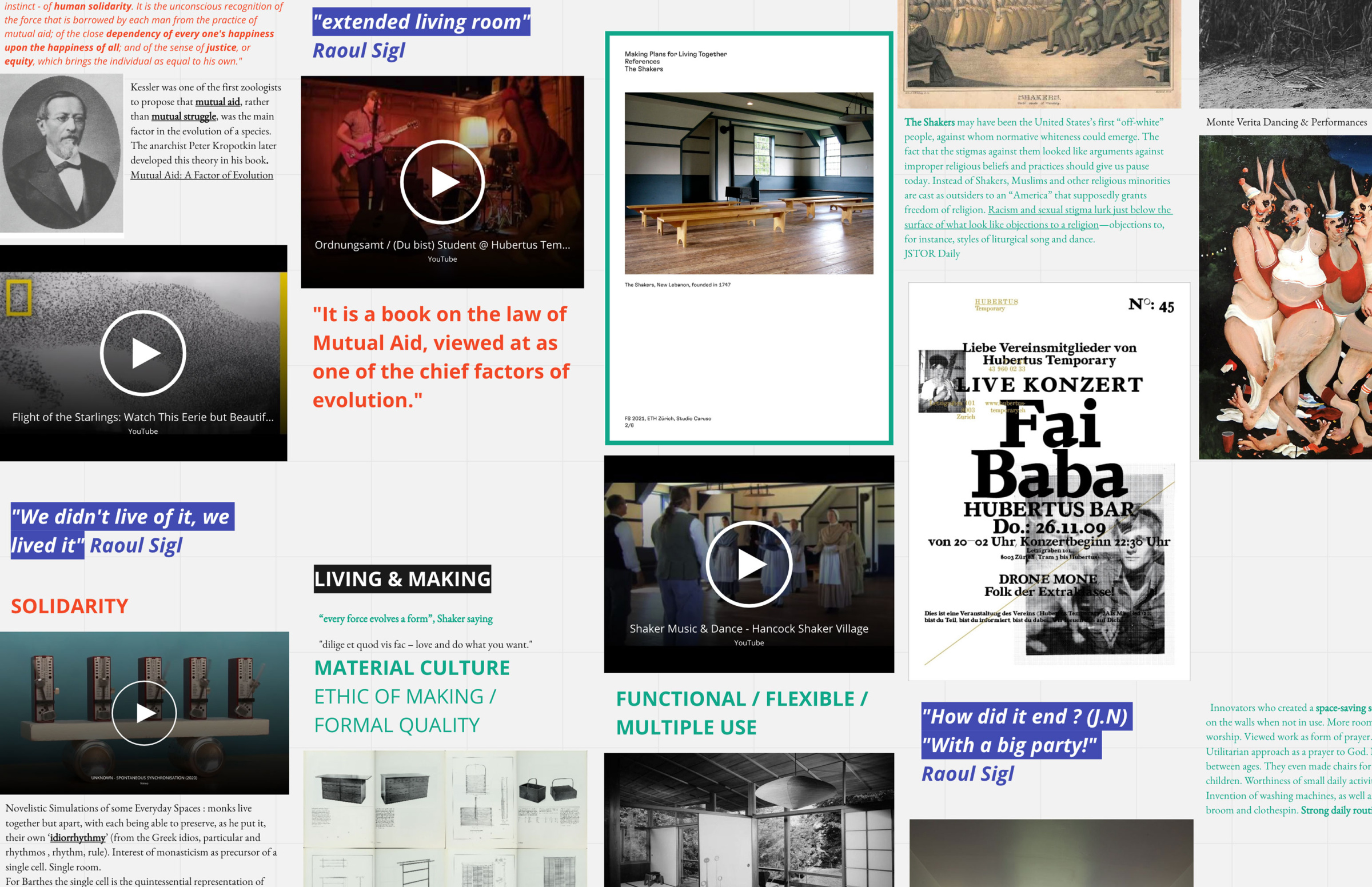


Making Plans for Living


Craneway Event, Tacita Dean


Re-Use Ciba


The environment of a building is under continuous social, economic and technological change. What role does the construction of a building play in the process of these environmental changes? Do new usage requirements inevitably lead to a complete replacement of the building, or can they be converted to make them suitable for the new environment? Can CIBA’s existing welfare building from 1957 fin a changed form even play an innovative, identity-creating role in a newly developed quarter?
Observing the existing has pushed me to choose the new paradigm of a personal comfort-adaptive architecture thanks to which I have created a new art of participatory inhabitation. My project highlights the importance of adaptability and flexibility in design. The doctorands are free to shift, adjust and divide the spaces based on their personal needs through flexible partitions (i.e. layers and walls). In addition, the flexibility of the layers and the controlled / uncontrolled spaces allow the doctorands to regulate the thermal conditions within the entire building.
To a large extent, CIBA’s welfare building built in 1957 is left close to its original state, with small-scale interventions and adaptations. Innovation and research are part of CIBA’s welfare house’s identity – they have always been and will remain. The doctorand’s house aims to be a place where innovation and research can flourish, a doctorand’s house that is perfectly adaptable to the needs of the individual as well as of the community.
What is it worth?


Welche Heimat?
Tobias Wagner
HS 2019 Welche Heimat?


Society and the Image


Public Building
Karina Breeuwer / Solange Piccard
FS 2019 Public Building, Zürich


Kulturhuset, Peter Celsing
Stockholm, 1974


Hidden Interiors
Jaehee Shin
HS 2018 Hidden Interiors, Zürich


E.1027, Eileen Gray
Roquebrune-Cap-Martin, 1929


The Ideal City
Petra Steinegger / Jeanne-Marie Léchot
FS 2018 The Ideal City, Dietikon


CIAM City, Le Corbusier
1930


Describing Beauty
Lisa Neuenschwander
HS 2017 Describing Beauty, Zürich


Reception of the Ambassador in the Doge's Palace, Giovanni Antonio Canaletto
Venice, 1730


Structure and Society
Susanna Croce / Nadine Weger
FS 2017 Structure and Society, Zürich


Narkomfin, Moisei Ginzburg / Ignaty Milinis
Moskau, 1930


Social Structure
Tim Simonet / Tobias Gagliardi
HS 2016 Social Structure, Graubünden


History & People
Graubünden


